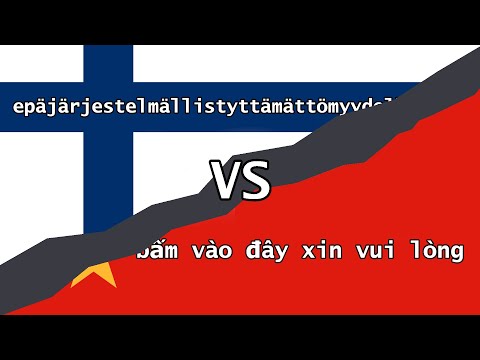
Why some words are SUPER long but others are super short
3-Second Blueprint (English)
- Cross-linguistic word length reflects morphological information density per word rather than usage frequency alone, as seen in Hungarian.
- Agglutinative languages chain single-meaning affixes together, while fusional languages pack person, number, and tense into one inflection.
- Analytic and isolating languages like English and Vietnamese rely mostly on short unbound words and helper prepositions along a continuum.
Morphological TypologyAgglutinative AffixesFusional InflectionAnalytic Syntax
3-Sekunden-Fazit (Deutsch)
- Die Wortlänge einer Sprache hängt primär von der morphologischen Informationsdichte pro Wort ab statt bloß von der Nutzungshäufigkeit.
- Agglutinierende Sprachen reihen eindeutige Affixe aneinander; flektierende Sprachen verschmelzen Person, Numerus und Tempus in einer Endung.
- Analytische und isolierende Sprachen wie Englisch oder Vietnamesisch nutzen überwiegend kurze Einzelwörter und Präpositionen auf einem Kontinuum.
Morphologische TypologieAgglutinierende AffixeFlektierende BeugungAnalytische Syntax
Note / Hinweis: Blueprints are AI-generated educational summaries (0% Politics · 0% Religion · 0% Brainrot) and do not constitute medical, legal, or financial advice. / KI-generierte Zusammenfassung zu Bildungszwecken – ersetzt keine medizinische, rechtliche oder finanzielle Fachberatung.