Hypergolic Fuels – The Chemistry of a Rocket Launch
3-Second Blueprint (English)
- Rocket propulsion balances specific impulse, propellant mass, and safety while carrying both fuel and oxidizer into airless space.
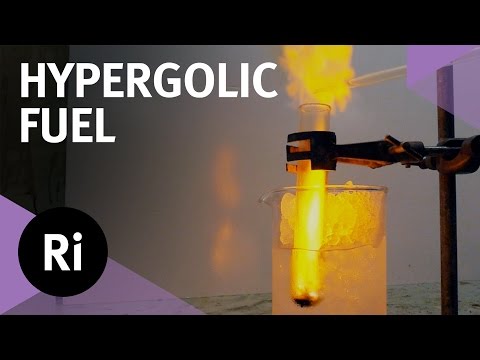
- Unlike pre-mixed solid boosters or cryogenic LH2/LOX tanks, hypergolic liquids ignite spontaneously upon contact without a spark.
- Condensing dinitrogen tetroxide (N2O4) and adding dimethylhydrazine triggers an instant zero-barrier reaction into hot expanding gas.
Hypergolic PropellantsDinitrogen TetroxideDimethylhydrazineCryogenic Propulsion
3-Sekunden-Fazit (Deutsch)
- Raketenantriebe müssen spezifischen Impuls, Treibstoffmasse und Sicherheit abwägen und im Vakuum eigenen Oxidator mitführen.
- Anders als Feststoffbooster oder kryogene LH2/LOX-Systeme entzünden sich hypergole Flüssigkeiten bei Kontakt spontan ohne Funken.
- Kondensiertes Distickstofftetroxid (N2O4) und Dimethylhydrazin reagieren ohne Aktivierungsbarriere sofort zu heißem Expansionsgas.
Hypergole TreibstoffeDistickstofftetroxidDimethylhydrazinKryogener Antrieb
Note / Hinweis: Blueprints are AI-generated educational summaries (0% Politics · 0% Religion · 0% Brainrot) and do not constitute medical, legal, or financial advice. / KI-generierte Zusammenfassung zu Bildungszwecken – ersetzt keine medizinische, rechtliche oder finanzielle Fachberatung.