Serial Communications Explained: UART, I2C, and SPI
3-Second Blueprint (English)
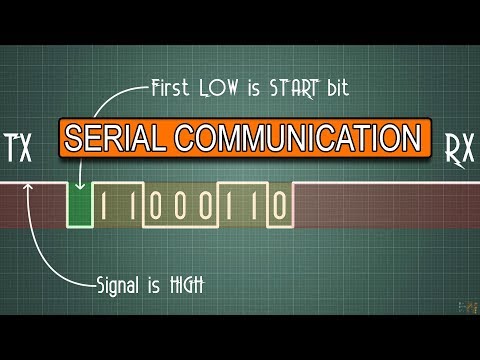
- UART sends asynchronous data over TX and RX lines without a clock, requiring matching baud rate, bit length, and start/stop bits.
- I2C uses two synchronous wires (SDA and SCL) up to ~400 kbps, routing data via unique slave addresses on a shared bus.
- SPI uses four wires—Clock, MOSI, MISO, and Chip Select pulled low—for fast synchronous master-slave microcontroller transfers.
UART (TX/RX Asynchronous)I2C Bus (SDA & SCL)SPI (MOSI, MISO, CS)Slave AddressingOscilloscope Signal Analysis
3-Sekunden-Fazit (Deutsch)
- UART überträgt Daten asynchron über TX und RX ohne Taktleitung und erfordert identische Baudrate, Bitlänge sowie Start-/Stoppbits.
- I2C nutzt zwei synchrone Leitungen (SDA und SCL) bis ca. 400 kbit/s und adressiert Zielgeräte über eindeutige Slave-Adressen.
- SPI verwendet vier Leitungen – Takt, MOSI, MISO und auf Low gezogenes Chip Select – für schnelle Mikrocontroller-Kommunikation.
UART (Asynchron TX/RX)I2C-Bus (SDA & SCL)SPI (MOSI, MISO, CS)Slave-AdressierungOszilloskop-Signalanalyse
Note / Hinweis: Blueprints are AI-generated educational summaries (0% Politics · 0% Religion · 0% Brainrot) and do not constitute medical, legal, or financial advice. / KI-generierte Zusammenfassung zu Bildungszwecken – ersetzt keine medizinische, rechtliche oder finanzielle Fachberatung.