Apoptosis - internal and external pathways
3-Second Blueprint (English)
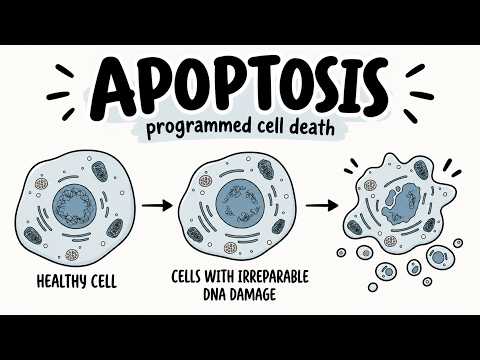
- Internal stress like DNA damage releases mitochondrial cytochrome c, which binds APAF-1 to form the apoptosome and activate caspase-9.
- Extrinsic death signaling activates initiator caspases and cleaves Bid into tBid, amplifying mitochondrial cytochrome c release.
- Both pathways converge on executioner caspases-3 and -7, packaging cell fragments into apoptotic bodies for inflammation-free clearance.
Cytochrome c & APAF-1 apoptosomeInitiator caspase-9 activationTruncated Bid (tBid) crosstalkExecutioner caspases-3 and -7Non-inflammatory apoptotic bodies
3-Sekunden-Fazit (Deutsch)
- Zellstress wie DNA-Schäden setzt Cytochrom c frei, das mit APAF-1 das Apoptosom bildet und die Initiator-Caspase-9 aktiviert.
- Der extrinsische Weg spaltet zudem Bid zu tBid, was die mitochondriale Cytochrom-c-Freisetzung verstärkt.
- Beide Wege aktivieren die Effektor-Caspasen 3 und 7, die Zellreste ohne Entzündung in Apoptosekörper für Makrophagen verpacken.
Cytochrom c & APAF-1-ApoptosomInitiator-Caspase-9-AktivierungtBid-Signalweg-KopplungEffektor-Caspasen 3 und 7Entzündungsfreie Apoptosekörper
Note / Hinweis: Blueprints are AI-generated educational summaries (0% Politics · 0% Religion · 0% Brainrot) and do not constitute medical, legal, or financial advice. / KI-generierte Zusammenfassung zu Bildungszwecken – ersetzt keine medizinische, rechtliche oder finanzielle Fachberatung.