Brave New World | Summary & Analysis | Aldous Huxley
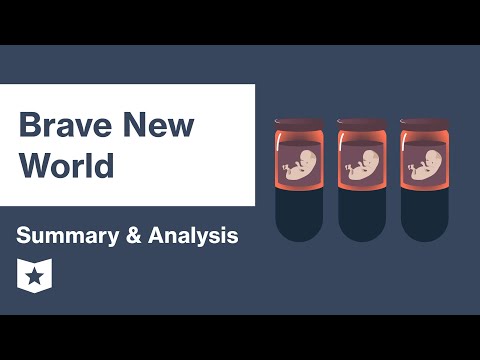
3-Second Blueprint (English)
- Published in 1932, Huxley's Brave New World models contented domination, where citizens are conditioned to love their own oppression.
- Dated from Henry Ford's 1908 Model T, the World State enforces stability via cloning, rigid castes, Pavlovian training, and drugs.
- Through irony and Mustapha Mond's defense of painless consumerism, Huxley shows how pleasure can quietly erase art, science, and freedom.
Contented DominationPavlovian ConditioningFordist Mass ProductionPharmacological ControlSituational & Dramatic Irony
3-Sekunden-Fazit (Deutsch)
- Huxleys Schöne neue Welt (1932) entwirft das Modell zufriedener Unterwerfung, in dem Menschen lernen, ihre Unfreiheit zu lieben.
- Datiert nach Fords Modell T (1908), sichert der Weltstaat Stabilität durch Klonen, starre Kasten, Konditionierung und Drogen.
- Über Ironie und Mustapha Monds Plädoyer für schmerzlosen Konsum zeigt Huxley, wie Genuss Kunst, Wissenschaft und Freiheit verdrängt.
Zufriedene UnterwerfungPawlowsche KonditionierungFordistische MassenproduktionPharmakologische KontrolleSituations- & dramatische Ironie
Note / Hinweis: Blueprints are AI-generated educational summaries (0% Politics · 0% Religion · 0% Brainrot) and do not constitute medical, legal, or financial advice. / KI-generierte Zusammenfassung zu Bildungszwecken – ersetzt keine medizinische, rechtliche oder finanzielle Fachberatung.