Glycolysis Explained (Aerobic vs. Anaerobic, Pyruvate, Gluconeogenesis)
3-Second Blueprint (English)
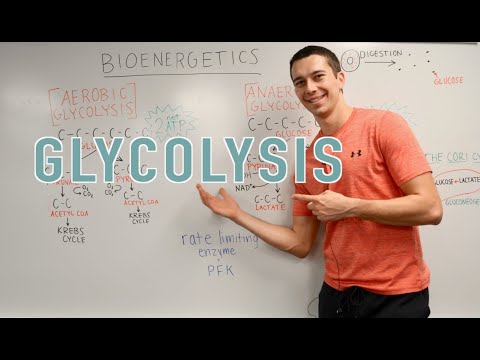
- Cytoplasmic glycolysis splits one 6-carbon glucose molecule into two 3-carbon pyruvates, yielding 2 net ATP regulated by PFK.
- Under intense anaerobic demand without enough oxygen, pyruvate forms lactate, which gluconeogenesis can recycle into glucose.
- When cellular oxygen is sufficient, pyruvate enters the mitochondria for the Krebs cycle and oxidative phosphorylation.
Glycolysis (Glucose Lysis)Phosphofructokinase (PFK)Pyruvate & LactateCori Cycle & GluconeogenesisKrebs Cycle Entry
3-Sekunden-Fazit (Deutsch)
- Die Glykolyse im Zytoplasma spaltet ein C6-Glukosemolekül in zwei C3-Pyruvate und liefert netto 2 ATP, gesteuert durch PFK.
- Bei hohem anaerobem Energiebedarf ohne genug Sauerstoff entsteht Laktat, das per Glukoneogenese wieder zu Glukose werden kann.
- Bei ausreichender Sauerstoffversorgung gelangt Pyruvat für Citratzyklus und oxidative Phosphorylierung in die Mitochondrien.
Glykolyse (Glukosespaltung)Phosphofructokinase (PFK)Pyruvat & LaktatCori-Zyklus & GlukoneogeneseCitratzyklus (Krebs-Zyklus)
Note / Hinweis: Blueprints are AI-generated educational summaries (0% Politics · 0% Religion · 0% Brainrot) and do not constitute medical, legal, or financial advice. / KI-generierte Zusammenfassung zu Bildungszwecken – ersetzt keine medizinische, rechtliche oder finanzielle Fachberatung.