How a Wrong Color Stripe Led to a Pacemaker Under the Skin #inventions #science #history
3-Second Blueprint (English)
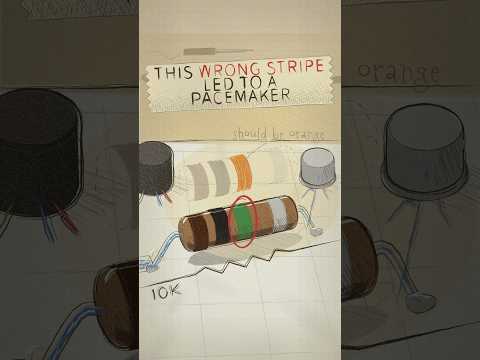
- While building a 1950s heart-rhythm recorder, engineer Wilson Greatbatch grabbed a green-striped resistor instead of orange.
- Increasing resistance 100-fold shifted the circuit's timing to emit a 1.8 ms pulse followed by 1 second of silence.
- Recognizing that this intermittent electrical rhythm matched human cardiac pacing led to the implantable pacemaker.
Resistor color codeRC oscillator timingImplantable pacemakerWilson Greatbatch
3-Sekunden-Fazit (Deutsch)
- Beim Bau eines Herztonrekorders in den 1950ern griff Ingenieur Wilson Greatbatch zu einem Widerstand mit grünem statt orangem Ring.
- Der 100-fach höhere Widerstandswert änderte die Zeitkonstante auf einen 1,8-ms-Impuls gefolgt von einer Sekunde Pause.
- Da dieser Takt exakt dem Stimulationsbedarf eines kranken Herzens entsprach, entstand daraus der implantierbare Herzschrittmacher.
Widerstands-FarbcodeRC-ZeitkonstanteImplantierbarer SchrittmacherWilson Greatbatch
Note / Hinweis: Blueprints are AI-generated educational summaries (0% Politics · 0% Religion · 0% Brainrot) and do not constitute medical, legal, or financial advice. / KI-generierte Zusammenfassung zu Bildungszwecken – ersetzt keine medizinische, rechtliche oder finanzielle Fachberatung.