NASA's Dragonfly Mission to Titan
3-Second Blueprint (English)
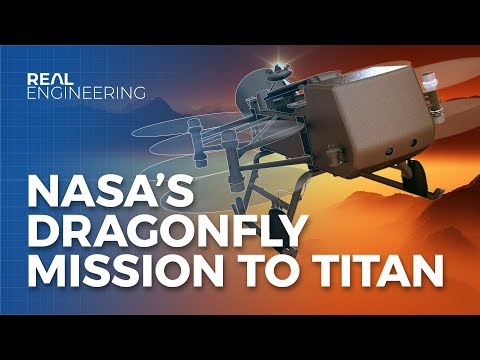
- Titan's atmosphere is 4.4 times denser than Earth's with one-seventh the gravity, letting rotorcraft generate lift using far less energy.
- With surface sunlight 100 times weaker than Earth's, Dragonfly relies on an RTG converting radioisotope decay heat into power.
- Facing a 2.5-hour signal delay, the 8-rotor drone uses onboard cameras, gyroscopes, and accelerometers for autonomous flight.
Dragonfly OctocopterRTG Nuclear PowerAutonomous NavigationTitan Aerodynamics
3-Sekunden-Fazit (Deutsch)
- Titans 4,4-mal dichtere Atmosphäre und ein Siebtel der Erdanziehungskraft ermöglichen Drehflüglern Auftrieb bei minimalem Energiebedarf.
- Da das Sonnenlicht dort hundertmal schwächer ist, wandelt ein Radioisotopen-Thermoelektrikgenerator (RTG) Zerfallswärme in Bordstrom um.
- Wegen 2,5 Stunden Funkverzögerung steuert der Acht-Rotor-Copter autonom per Bordkameras, Gyroskopen und Beschleunigungssensoren.
Dragonfly-OktokopterRTG-EnergiequelleAutonome BildnavigationTitan-Aerodynamik
Note / Hinweis: Blueprints are AI-generated educational summaries (0% Politics · 0% Religion · 0% Brainrot) and do not constitute medical, legal, or financial advice. / KI-generierte Zusammenfassung zu Bildungszwecken – ersetzt keine medizinische, rechtliche oder finanzielle Fachberatung.